Security Profile
Security Profile
This page provides details regarding the Data Adapter security profile.
At a high level there are three broad components to the security profile of the Data Adapter. These are as follows:
- Termination: The method of establishing Layer 4 ( TCP) connectivity.
- Transport: Mechanism for establishing encrypted communication and Layer 6 connectivity.
- Endpoint: Authentication of requests at a per endpoint level on the Layer 7 level.
Supported Profiles
The following table outlines the currently supported Data Adapter security profile configurations.
| Termination | Transport | Endpoint | Notes |
|---|---|---|---|
| Public via the internet | TLS | Token | |
| AWS ELB via PrivateLink | TLS | Token | |
| AWS Private API Gateway | TLS | Token | |
Azure Private Link
| TLS | Token | |
Azure Private Link
| TLS | Token | Supported via Professional Services |
| Azure Private Link | MTLS | Token | Supported via Professional Services |
| IPSEC Tunnel | TLS | Token | Supported via Professional Services |
Deprecated Security Profiles
These profiles are deprecated and adapters using them must migrate to a supported profile by the retirement dates below.
| Termination | Transport | Endpoint | Retirement Date |
|---|---|---|---|
| Azure PrivateLink | MTLS | Static API Key | Feb 2025 |
| IPSEC Tunnel | MTLS | Static API Key | Feb 2025 |
| AWS ELB via PrivateLink | MTLS | None (Implicit Trust) | Feb 2025 |
| AWS ELB via PrivateLink | MTLS | Static API Key | Feb 2025 |
| Azure PrivateLink | TLS | Static API Key | Nov 2026 |
Termination Methods
The following mechanisms for network termination are currently supported:
Public
The Data Adapter is accessible over the internet.
AWS
- AWS ELB via PrivateLink: The Data Adapter Endpoint is presented as an AWS PrivateLink Service in one or more supported HaaS PrivateLink regions. Endpoints must be attached to all HaaS availability zones (see below) for the given region.
- AWS Private API Gateway: The Data Adapter endpoint is presented through an API Gateway (APIGW) private API. The Biza
APIGW interface endpoint identifier (
sourceVpce) must be whitelisted by the customer to allow Biza to call their data-adapter.
HaaS PrivateLink Supported Regions
ap-southeast-2(Zones:apse2-az1,apse2-az2,apse2-az3)
Azure
- Azure Private Link without a sub-resource: The Data Adapter Endpoint is presented as an Azure Private Link Service within one or more of the supported HaaS Azure Private Link Regions.
- Azure Private Link with sub-resources: Azure Private Link has a concept of sub-resources, which defines a specific type of service linked behind the Private Link. If you opt to use a sub-resource instead of a "standard" Private Link without sub-resources, Biza currently supports the following sub-resources:
- App Services (sub-resource =
sites) - Application Gateway (this sub-resource requires you to provide your frontend IP configuration name to Biza)
- App Services (sub-resource =
- Any other type of sub-resources are not yet supported, however can be covered under Processional Services.
HaaS Azure Private Link Supported Regions
Australia SoutheastAustralia East
Where the customer architecture supports it, the HaaS environment supports Active/Active Adapter API termination.
Transport Methods
The following mechanisms for transport security are currently supported.
TLS
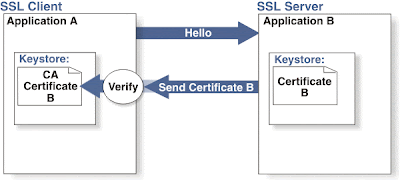
Transport Layer Security (TLS) is an encryption protocol widely used on the Internet (e.g., https://), which was formerly called SSL. It authenticates the server in a client-server connection and encrypts communications between HaaS and the Data Adapter to ensure that the data is protected in transit.
Mutual TLS
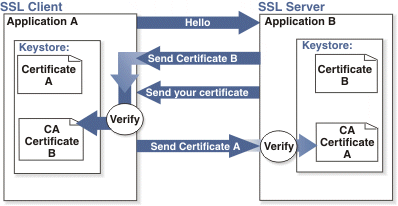
Mutual TLS, or mTLS for short, is a method for mutual authentication on top of TLS. mTLS ensures that the parties at each end of a network connection are who they claim to be by verifying that they both have the correct key/certificate. In mTLS, both the Data Adapter Server and HaaS Client certificates are signed by the customer's Certificate Authority (CA) and both parties validate the certificate presented by the other. This provides both transport layer encryption and two-way verification.
This additional authentication is not a substitute for endpoint (OAuth2) authentication, but allows for transport layer authentication may be useful when the Data Adapter sits behind a lower lever border device (e.g., WAF).
This transport option adds complexity to the management of a HaaS installation for both Biza and Customer. Customers implementing mTLS transport will need to sign Certificate Signing Requests (CSRs) for each HaaS space once per year and approve change control events to deploy the updated client certificates.
Endpoint Security
The following endpoint security mechanisms are currently supported.
Token
A Bearer Token is obtained through an OAuth2 Client Credentials grant to a customer-specified token endpoint. This token is then used at the intended endpoints.
Supported Client Authentication
- Client ID and Client Secret
Supported OAuth Providers
- Auth0
- Okta
- Azure AD
- Amazon Cognito
None (Deprecated)
See the table at the top of the page of the retirement date for profiles involving this option.
No endpoint security mechanism. This is, in essence, an implicit security mechanism that relies upon the private network connectivity (afforded by PrivateLink etc) and Mutual TLS Transport Method.
Static API Key (Deprecated)
See the table at the top of the page for the retirement date of profiles involving this option.
Note that there is still a way to configure HaaS to send additional headers to the Data Adapter, but this header is no longer used for authentication.
Endpoint utilises a customisable header and a static key to authenticate the client access.
This provides an authentication outcome on top of the selected transport method allowing for multi-tier authentication.
Additional Adapter Configurations
Routing Keys / Additional Static Header
A Data Adapter can often need additional headers sent with the HTTP request (e.g., an API routing key). HaaS continues to support the configuration to allow a static header name and header value string with each Data Adapter call to facilitate these use cases.
This MUST not be a secret / used for authentication.